
Source: Instagram @achsyhirr
Not long ago, the Indonesian Parliament (DPR) made a so called “breakthrough”: raising their own salaries. Their reasons varied, from the heavy burden of their work to the dignity of being lawmakers. Meanwhile, the very people they represent are still busy wondering how to put food on the table tomorrow. And so, I can’t help but ask myself: why was I born as an ordinary Indonesian citizen, not as a member of Parliament?
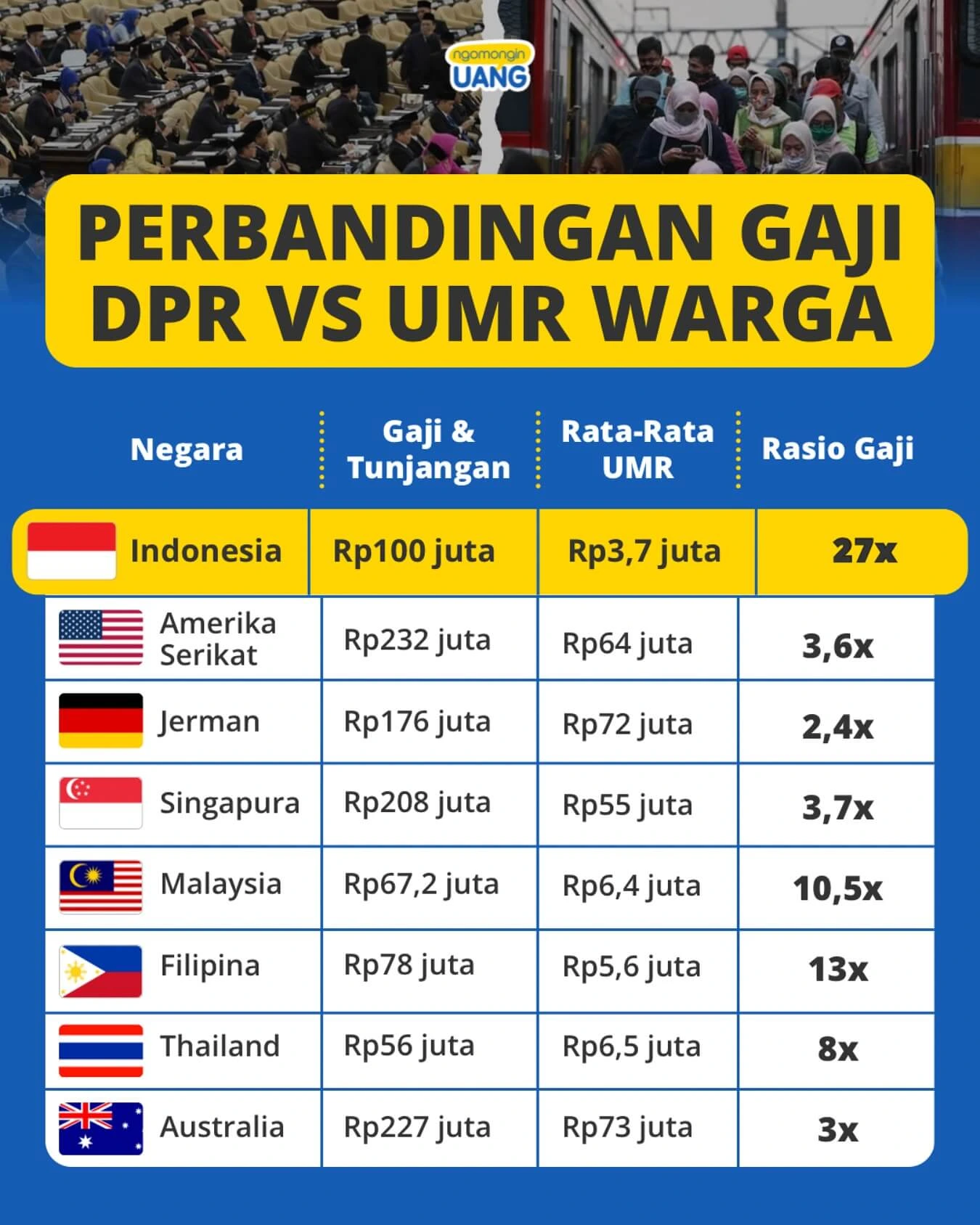
Maybe this is fate: some are born to work to the bone for minimum wage, while others are born with full facilities, ever increasing salaries, and declining performance. The irony is that when people ask for subsidies, the answer is always “the state budget is limited.” But when they demand a pay raise, suddenly the budget becomes as elastic as a rubber band. Beyond their base salary of around Rp 4-7 million, they still receive generous benefits: millions for fuel, millions more for rice, and the most outrageous of all a housing allowance of Rp 50 million per month. Imagine, one month’s rent for them equals more than a year’s salary for many working class families. Add it all up, and their monthly perks easily exceed Rp 100 million numbers that ordinary citizens only ever see on an ATM screen, never in their accounts. (See the chart comparing DPR salaries with those of Indonesian citizens and legislators abroad).
Source: Instagram @ngomonginuang
Being born an Indonesian citizen often feels like winning a lottery with the wrong prize. What do we get? Broken roads, frequent blackouts, endless bureaucracy, and political dramas longer than any soap opera. People tell me, “be proud to be Indonesian,” but I often wonder proud of what? Proud of a system where getting an ID card feels like a lifelong quest? Or proud of corruption scandals that appear weekly, like episodes of an endless series?
But maybe that’s the “beauty” of it: being an Indonesian citizen means being trained in godlike patience. We’re taught to survive rising rice prices, rising fuel costs, rising electricity bills while our wages rise. well, who knows when. And if there is a raise, it’s certainly not for us, but for those comfortably seated in power, enjoying million rupiah housing allowances and other luxuries we only see in property commercials.
August 28: A Wound After Independence Day
Another pressing problem is the attitude of our security forces, who often act arbitrarily toward the people as if their sole duty is to defend the ruling elite, not the citizens they swore to protect.
August 28, 2025, will forever be remembered not as a joyful moment eleven days after we celebrated independence day, but as a day of mourning. How ironic that in a nation that proudly calls itself “independent,” the poor lost their lives crushed under the very armored vehicles of the police, who were supposed to protect them.
We are just ordinary citizens. No wealth, no power. Our only weapons are clenched fists and voices raised together. Yet, standing before us are heavily armed officers with shields, tear gas, and weapons. All paid for by the sweat and taxes of the people. If those meant to safeguard us instead turn into executioners, where else can the people seek protection?
I know many police officers are recruited right after high school. That, in itself, is not the issue. The real problem is mental training that fails to instill humanity. How could someone entrusted with such a noble duty end up arrogant, cocky, and even bragging on social media? Weren’t we taught from childhood that the police are friends of the people, guardians of justice? And yet, in reality, they have become the very nightmare of the poor.
This August 28 reminds us: independence day is no longer about driving away foreign colonizers, but about confronting new forms of oppression from those who were supposed to stand by our side. The poor lose their lives, while officers laugh at their bravery on social media. Is this what a truly independent Indonesia looks like?
A Nation on the Brink
If the government takes no firm action, then don’t be surprised when this country truly collapses. Not just economically, but morally through the erosion of public trust. What’s the point of having a president, ministers, and state institutions if, when citizens are oppressed, they stay silent and look the other way? Silence in the face of injustice is nothing less than complicity. It signals to the people that those in power are fine with police brutality, that the law remains sharp downward but blunt upward.
A nation does not fall only because of enemies from outside. More often, it collapses due to betrayal from within. When the police turn into engines of oppression, when the people lose trust, and when the government no longer cares, that’s when national collapse is not just a threat, it’s a reality waiting at the door.
Democracy: A Cracked Mask
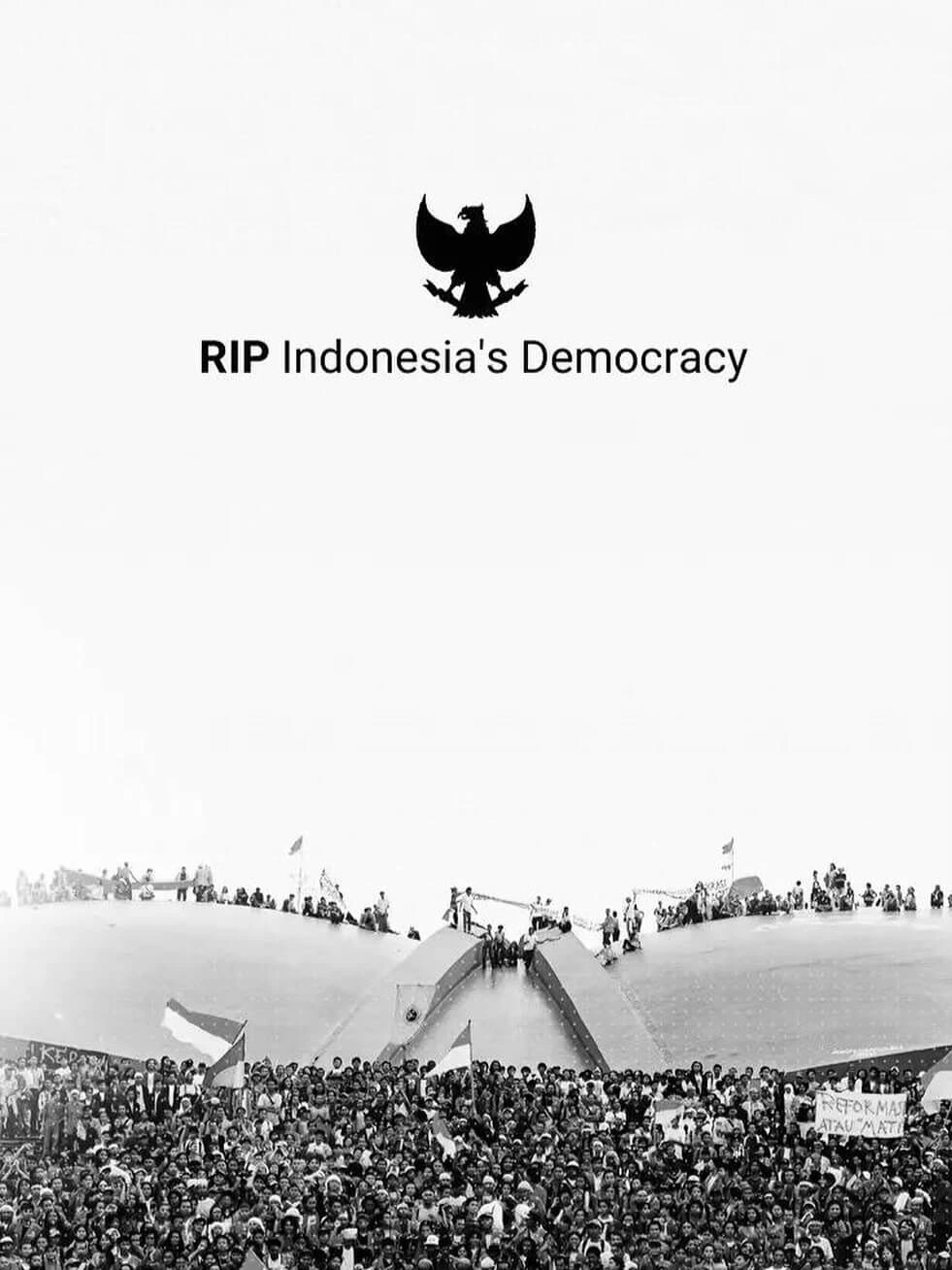
And let’s not forget, we live in a country that claims to uphold democracy. Democracy means power rests in the hands of the people, that the people’s voice is God’s voice, and that government and police are nothing more than public servants. But in practice, democracy here has been reduced to a five year ritual: citizens cast their votes in the ballot box, and after that, they are forgotten.
The irony deepens when we remember that on August 28, while citizens flooded the streets, facing tear gas, armored vehicles, and the threat of death, members of Parliament casually chose to Work From Home. The very institution that calls itself the “House of the People” stayed hidden in comfort, watching the chaos unfold from their laptops inside luxurious houses funded, of course, by taxpayers’ money. If democracy truly means representation, then where were our so called representatives when the people needed them most?
And it wasn’t only Indonesians who raised their voices. Influential figures with global reach artists like Stephanie Poetri, Rich Brian, and others from the Indonesian diaspora began speaking up, highlighting the absurdity and brutality that unfolded. Their voices amplified the cries of the people, making sure the world could see what was happening in a country that calls itself the third largest democracy. When international influencers start questioning the integrity of our institutions, it is a clear sign that the mask of democracy is cracking for all to see.
What we see instead is oligarchy disguised as democracy. Citizens’ voices are suppressed, criticism is silenced, and the police are used as tools to protect the interests of the ruling class. If democracy is allowed to remain mere formality without substance, then it will die a slow death.
A healthy democracy should guarantee freedom of speech, protect citizens’ rights, and ensure that laws are applied fairly to everyone. But what we witness today is the opposite: democracy turned into a mask, while behind it the people are treated as enemies, not as rightful owners of this nation.
References:
August 2025 Indonesian protests
Tunjangan DPR Melejit, Ekonomi Masyarakat Masih Terimpit
Protests resume in Indonesia’s Jakarta after ride-share driver killed